Birmingham Selective Licensing: Areas, Fees and How to Check
Understand Birmingham's property licensing. Learn about city-wide Additional HMO and Selective Licensing in 25 wards, effective 5 June 2023. Essential guide for landlords.
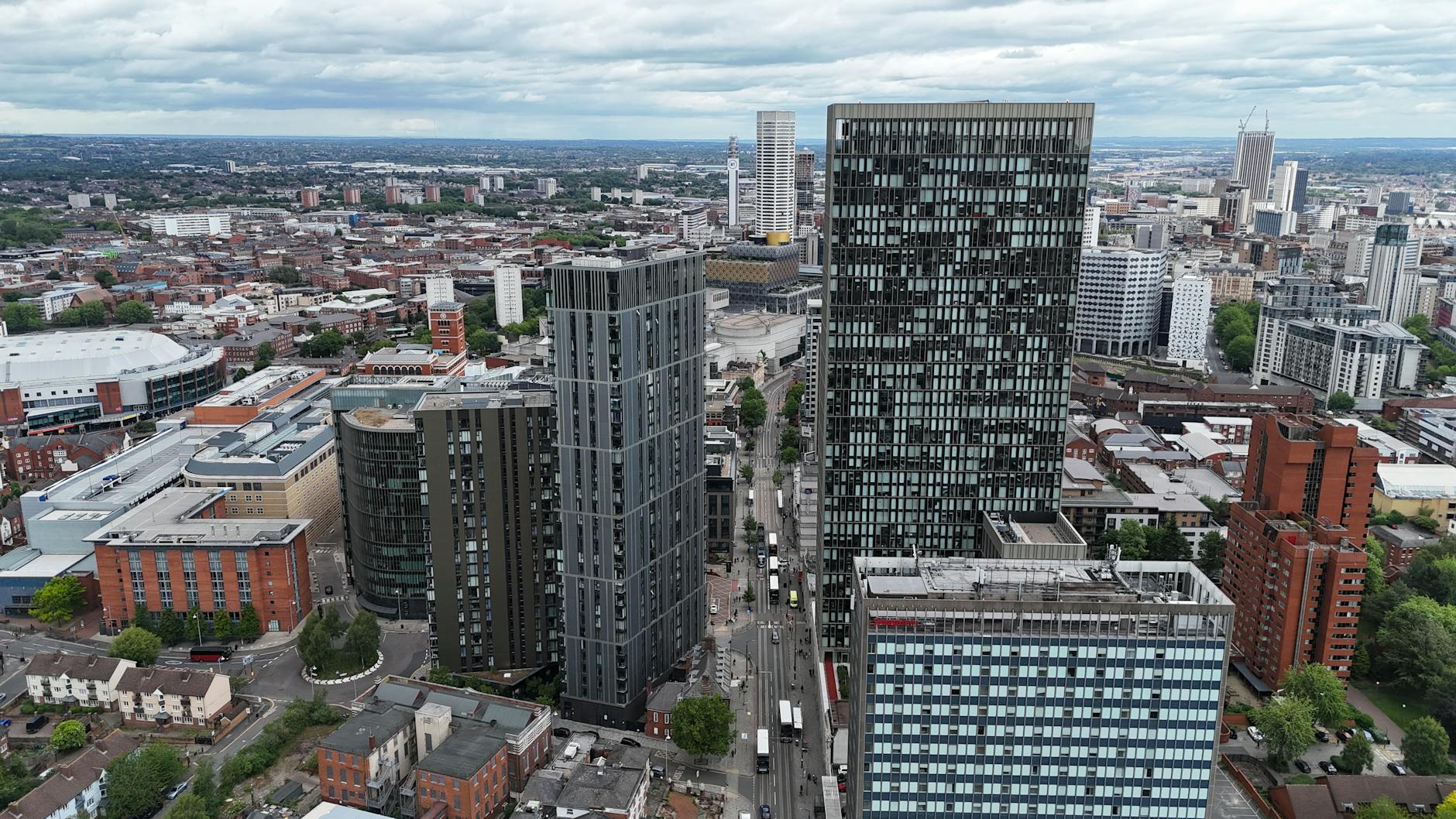
Photo: David Pickup | Advertising & Marketing 🇬🇧 on Pexels
Last updated:
Birmingham City Council has implemented comprehensive property licensing schemes to elevate standards within its private rented sector. These initiatives, comprising both a city-wide Additional House in Multiple Occupation (HMO) licensing scheme and a targeted Selective Licensing scheme across 25 wards, commenced on 5 June 2023 [1, 2]. The council's proactive approach aims to ensure all privately rented properties provide safe, well-managed accommodation for tenants, whilst also addressing issues such as deprivation and crime in specific areas [3].
The Additional HMO licensing scheme extends regulatory oversight to smaller HMOs throughout all 69 wards of Birmingham. This includes properties occupied by three or more tenants forming two or more households who share facilities, which are not already covered by mandatory HMO licensing [4]. The Selective Licensing scheme, conversely, applies to all privately rented properties, regardless of occupancy, within its designated wards [5]. Both schemes require landlords to obtain a licence for each eligible property, demonstrating a commitment to maintaining property standards and responsible management practices.
Landlords operating in Birmingham must understand the specific requirements of these schemes to ensure compliance and avoid significant penalties. The council has made it clear that failure to obtain the necessary licences can result in fines of up to £30,000 through Civil Penalty Notices or unlimited fines upon prosecution [6]. Furthermore, tenants in unlicensed properties may be able to reclaim up to 12 months' rent through a Rent Repayment Order, and any Section 21 eviction notices served for an unlicensed property would be invalid [6].
| Scheme Type | Area Covered | Start Date | End Date (if known) | Fee Range (per licence) |
|---|---|---|---|---|
| Additional HMO Licensing | All 69 wards (city-wide) | 5 June 2023 | 4 June 2028 | £755 [7] |
| Selective Licensing | 25 designated wards | 5 June 2023 | 4 June 2028 | £700 [8] |
What Landlords Need to Know
Birmingham's licensing landscape requires landlords to be diligent in identifying which scheme, if any, applies to their properties. The Additional HMO licensing scheme specifically targets smaller HMOs, ensuring that even properties with fewer than five occupants meet safety and management standards. For properties within the 25 designated Selective Licensing wards, the requirement applies to all privately rented homes, irrespective of their occupancy type. It is crucial for landlords to verify their property's location against the list of selective licensing wards to determine their obligations.
The 25 wards covered by the Selective Licensing scheme are: Acocks Green, Alum Rock, Aston, Balsall Heath, Birchfield, Bordesley Green, Bordesley and Highgate, Bournbrook and Selly Park, Edgbaston, Gravelly Hill, Handsworth, Heartlands, Holyhead, Ladywood, Lozells, North Edgbaston, Small Heath, Soho and Jewellery Quarter, South Yardley, Sparkbrook & Balsall Heath, Sparkhill, Stockland Green, Tyseley and Hay Mills, Ward End, and Yardley West and Stechford [9]. These areas were selected based on factors such as high concentrations of private rented properties, coupled with elevated levels of deprivation or crime, which the scheme aims to address [3].
Both licensing schemes are valid for a period of five years from their commencement date of 5 June 2023, meaning they are currently set to conclude on 4 June 2028. The application process for both licences is managed through the Birmingham City Council website, requiring landlords to provide detailed property information, including floor plans, electrical installation certificates, and gas safety certificates [10]. The fees are £755 for an Additional HMO licence and £700 for a Selective Licence, with no discounts available for landlords owning multiple properties within the selective licensing areas [8].
Landlord Checklist
1. Identify Property Type: Determine if your property is a House in Multiple Occupation (HMO) and if it falls under the Additional HMO licensing criteria (three or more tenants, two or more households, sharing facilities).
2. Check Ward Status: If your property is not an HMO, verify if it is located within one of the 25 designated Selective Licensing wards in Birmingham.
3. Gather Documentation: Prepare all necessary documents, including floor plans with room measurements, current electrical installation certificates, and gas safety certificates, before starting your application.
4. Budget for Fees: Allocate £755 for an Additional HMO licence or £700 for a Selective Licence for each eligible property.
5. Apply Online: Complete the licence application via the Birmingham City Council's dedicated online portal.
6. Understand Conditions: Familiarise yourself with the specific licence conditions, which may cover aspects from waste management to tackling anti-social behaviour, to ensure ongoing compliance.
7. Stay Informed: Regularly check the Birmingham City Council website for any updates or changes to licensing requirements.
"Failure to obtain the necessary licences can lead to severe consequences, including fines up to £30,000 or unlimited fines upon prosecution, and can invalidate Section 21 eviction notices." [6]
Ensuring compliance with Birmingham's property licensing schemes is not merely a legal obligation, but a commitment to providing quality housing and fostering stable communities. Landlords are encouraged to utilise the resources available on the Birmingham City Council website for further guidance and to initiate their licence applications promptly. This proactive approach safeguards landlords against penalties and contributes positively to the city's private rented sector.
References
2] [Selective licensing | Birmingham City Council
4] [Apply for an additional HMO licence | Additional licensing for HMOs | Birmingham City Council
5] [Selective licensing | Birmingham City Council
6] [Selective licensing | Birmingham City Council
7] [Section 257 property licence | Additional licensing for HMOs | Birmingham City Council
8] [Selective licensing | Birmingham City Council
10] [Apply for an additional HMO licence | Additional licensing for HMOs | Birmingham City Council
Licensing data sourced from individual council websites and the MHCLG licensing register. Last verified: . Always confirm current scheme status with the council directly before making licensing decisions.
Licensing guides
Related articles
HMO Room Size Requirements: The 6.51 Square Metre Rule Explained
HMO licences require minimum room sizes: at least 6.51 square metres for a single adult. This guide explains the rules, how to measure correctly, and what happens if a room is too small.
How to Apply for a Selective Licence: Step-by-Step Guide
A practical step-by-step guide to applying for a selective licence, including what documents you need, how much it costs, how long it takes, and what happens if your application is refused.
Renters' Rights Act 2025: What It Means for Property Licensing
The Renters' Rights Act 2025 is now in force. It abolishes Section 21 no-fault evictions, raises civil penalties to £40,000, extends the Decent Homes Standard to private rentals, and creates a mandatory landlord registration database. Here is what every landlord needs to know.
We use cookies
Tuxa uses a strictly necessary session cookie to keep you logged in. We also use Umami Analytics — a privacy-friendly, cookie-free tool that collects no personal data. Privacy & Cookie Policy